Sunday, 11 September 2011

Royal Opera House - soft opening

You may or may not be aware but Muscat is about to open the doors of its beautiful and impressive brand new Royal Opera House.

The past weekend Muscat was flooded with Italians: a whole Opera cast, staff and orchestra had been flown to Oman for two evenings of performances for a prestigious soft opening event.

I was going to tell you the story of how we managed to get our fidgety fingers onto the oversized gold embroidered tickets for the “by invitation only” event but … naah. Let’s just say that sometimes being Italian with a shiny “faccia di bronzo” can help a lot.

Last Thursday night we had the pleasure of watching an amazing performance of a Gulf-adapted version of Rigoletto by the Teatro Regio di Parma.

Talented artists, amazing costumes, breathtaking sets and an outstanding venue made for a very special evening. Especially if you count that we had some of the best seats in the house (the ones from where you can count the buttons on the Tenor’s costumes).

We are immensely honoured to have been given the opportunity to be there for their fantastic performance and as an Italian I am especially proud that our talented artists and finest productions have been chosen to launch this outstanding and incredible new cultural venue in Oman.

I am afraid I have no pictures to give you (phones and cameras were duly confiscated for the duration of the performance - thank goodness) although I could show you a couple of pictures of the wedding style invitation and a couple of photos of us with the Duke of Mantua who we found in the bar playing pool after the performance.

What can I say? I guess only in Oman you can go to a special Opera event and then spend the rest of the evening in a pub across the road with some members of the cast fresh off the stage, as if they were old friends!

Anyway, we have an amazing theatre season coming up with top artists from all over the world in a spanking new and beautiful Opera House.

I am peeing my pants from the excitement and everybody seems to be in a bit of a ticket purchasing frenzy.

The grand opening is next month with Turandot and the Arena di Verona.

I hope I can make it as I will be coming back from the Musandam expedition on the day. of their last performance. 

Yes I am going back and I almost forgot to mention: I’ll be the expedition leader this year.

Lots of exciting stuff coming up! Bear with me, I’ll try to bring you up to speed soon.

Friday, 26 August 2011

Summer

The summer over here is never a particularly eventful time of the year. There is the heat and at the moment there is also Ramadan. Although at least it is about to end: just a few more days then finally back to normality.

In summer (and particularly during Ramadan) most of the expats escape; it is very quiet in town. We also went away. With a few trips back and forth to Europe I have clocked five weddings (great occasions to spend some nice time with people we hadn't seen in a while), a lot of air miles and an inflated credit card bill.

So now we are back and relatively settled for a little while (although we are already planning a holiday. The proper one I mean). The weather is already a lot milder, we have already started going to the beach. The good season is upon us and fun activities will start again.

For starters we are going to visit Salalah for Eid (the public holiday period that signs the end of Ramadan. This year it's 4 days off): finally we are going to see Dhofar in the Khareef (the monsoon that hits the south of the country transforming it into green land). Apparently it is about 30c and drizzly over there.

Amongst other news I have also been asked to lead the next expedition in Musandam with Biosphere Expeditions in October. Very excited to be going back.

The uni project is proceeding and hopefully I won't go into a fit when the deadline approaches (2nd December). S. says that of course I will.

I guess I am trying to be optimistic. Life is good, as usual, just a little bit uneventful at the moment. My hunch is that it won't stay that way for long;  in fact I can feel change in the air and.. as we say with Chiaruga "la stagione di Aldo, Giovanni e Giacomo sta per iniziare". :)

Sunday, 12 June 2011

The concept of beauty...three years on

The topic of "arabisation" is a recurrent subject amongst friends when we come to the realization that we may have been living in this part of the world a little bit too long. This realization usually strikes when casually noticing (and finding it totally normal) a certain tendency to be attracted to bling accessories and knickknacks.
This was exactly the subject of my friend A's very recent post after she went out and ordered a "Middle East Edition" of the the otherwise sober looking Sony Vayo. To see this wonderful piece of art you may visit the aforementioned post and figure.

In my mind I like to think that I am immune to this slow (yet dramatic) transformation in taste however today I surrendered that illusion after realising that for the last 2 days I have been fighting to desperately fit my Jeep with the beautiful steering wheel cover depicted below.


Yes that's what I shamelessly drive around with (also notice the shiny blue furry cushion I placed on the seat for added comfort).

Now, before you jump to any conclusions let me tell you that there is a (to me) plausible explanation to all this:

1. I did not purchase the furry object. It was a present given to husband as a joke; It had been laying with no purpose around the house since last Christmas.

2. The steering wheel gets really hot while the car is parked under the summer sun. With hot I mean that it literally scalds your fingers! Which makes it quite challenging to maneuver the car for the first 10-15 minutes when you drive off.


The other day seeing this thing laying around in the house I had my Eureka moment...

I admit that it is not exactly my idea of beauty but somehow I worry that it doesn't bother me at all to be seen sporting this stuff around. 

I will not comment in the cushion.

3 years ago, around this time of the year, after stumbling upon her blog, I was writing an email to my, then to me unknown friend to be A. asking what life in Oman was like.... I realise now that should have asked the right questions!

Tuesday, 3 May 2011

Stuff

What have I been up to? Stuff (as S.  would say)

Amongst the things that have kept me busy and away from the blog recently are:

Diving: lately teaching has also led me to understand a little bit of myself better. Quality and integrity are not something I am ready to compromise no matter what. I'd rather not teach.

Climbing: I'd been planning for about a year, since the exhilarating trip to the 7th hole, to tackle the via Ferrata at Snake Canyon. This one has been physically tough but I enjoyed the challenge very much. I'm not going to describe it into detail:  images are stronger than words and the video below plus the photos on flicker give u an exact idea of what I have put myself through.


On this trip I confirmed to myself once and for all that heights do not affect me at all (as long as I have a safety) and that my mind is highly rational despite what people may think judging by the kind of activities I sign up to. Hanging down, double strapped to a metal wire 100+ m from the ground is safer than crossing a busy road; you just have to convince your mind.

Conservation: I have popped to the UAE to help the Reef Check team from Dubai with some reef monitoring activities in Dibba a couple of weekends ago and delivered my first talk on conservation volunteering and the expeditions in Oman to a group of 60 5th grade pupils at a local school. Hopefully I will be able to do some more talks to the public in the near future.

Studying: amongst all this I am still hammering on with my project. I am teaching myself to program with visual basic .NET, researching (lots of reading!), writing, project managing and pushing my boundaries.

Piano lessons: I need to balance the logic with some art and creativity. I’ll be honest:  I am finding it hard. Plus I see very little art in learning to read music and try to coordinate fingers that have a life of their own but  this quote I heard today seems appropriate “ believe you can or nobody else will” and that is so true for many situations in life. The determination I need not to feel disheartened brings back memories of a very defining moment when my dance teacher pushed me to come out of my shyness shell as a child. Since then whenever I hesitate I think: I can.

This brings us to today. Today like any day was another inspirational day. Specifically today we attended the first TEDx event in Oman. For those who don’t know what TED and TEDx is about have a look at this link:

http://www.ted.com/tedx

S. and I often watch TED talks over breakfast to start the day in an inspirational way. It was a privilege to be able to attend a live event.

Today we were prompted to think (and write) about our idea of change so this is how I framed  it. It is a bit raw but I only had a few minutes to think about it:

Change is evolution, renewal and hope.
  • Evolution is the force that pushes humanity and the world forward
  • Renewal is the energy that brings about new ideas and makes room for new ways for looking at (old) things
  • Hope is what helps us win the fear of change, without hope for a better world there is no (positive) change.
And now, in the knowledge of what has led me this far, I add:

Change is what gives me the drive, because change is the essence of life.

Saturday, 16 April 2011

Lost in translation rules

The other day I visited one of the Ministries to obtain a permit to visit the Daymanyiat Islands with our boat. They are a nature reserve so a permit is required. Unfortunately we didn't go to the islands in the end because of the (incorrect) forecast and changeable weather that we have had during these past couple of weeks so we remained cautious and kept to the familiar waters of Bandar Khyran. Nonetheless I would like to share with you the rules for visiting the islands which I discovered last week and which I think are important:


My favourite is rule number 4 - I have heard that this is an issue that has caused some frictions between fishermen and divers lately. Personally, despite my strong views about conservation I am not a big fun of activist style action. I do believe that conservation is about education and awareness - like everything it requires a sustainable plan and suitable alternatives for people who make their living out of the sea - but that's another (long) story. However, apart from the fact that I fail to understand the role of cages and fishing nets in a marine reserve (other than maybe the fact that fishing is allowed on a seasonal basis?) I cannot remove from my head this image of divers/snorkelers suddenly disintegrating with fishing equipment.

In my imaginary world I have created a wicked version of battleship: I am placing diver in cell A4; diver activates self-destruct button on BCD while touching net - boom - net and diver disintegrated. Fish wins!

Ah... how boring would the world be if things didn't get lost in translation every now and then?

Saturday, 26 March 2011

Trip to Dhofar - tracking down the Arabian Leopard

I’m always excited at the prospect of travelling and exploring new places but when to that excitement you also add the feel-good factor of knowing that your trip has a purpose and that your being there contributes to the better good, the intensity of that excitement spikes to a level that is hard to describe.

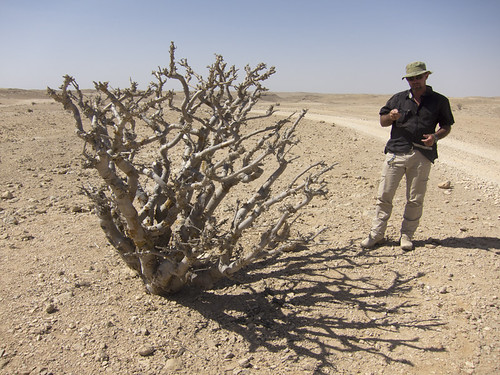
Frankincense Tree
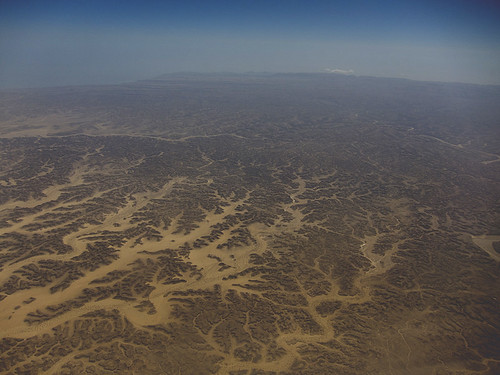
View on landing
This time I didn’t have to venture too far: 1.5 hrs after boarding my plane from Muscat, I was gliding with my fellow passengers above a grovel of dry Wadis (river beds) that seen from the air looked like a section of the human brain to me. Those scars on the land are a clear indication that this landscape, although so dry now, it’s chiselled regularly by the unstoppable works of flowing water. I was about to land in Salalah, the capital of Dhofar.


The region of Dhofar is known for the Khareef season, the seasonal dampening effect brought by the Asian monsoons whose arms reach the southern coast of Oman for a few months during the summer transforming an otherwise arid landscape into a verdant and vibrant land and attracting flocks of tourists from the surrounding countries looking for a break from the unforgiving summer heat.

Frankincense Tree
This is also the land of the Frankincense tree, a sturdy plant solidly rooted to the dry ground and a proud reminiscence of a glorious past of trades and traditions (http://whc.unesco.org/en/list/1010).  

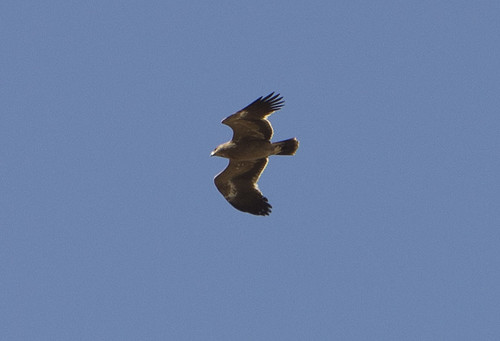
The flanks of the hills surrounding Salalah are covered in thorny bushes and trees, they are dry now but it is not hard to imagine the transformation during Khareef (I reinforce my resolution to come back in summer). Here herds of camels and cows regularly claim supremacy of the roads, eagles dot the sky and birds weave their intricate nests up the coconut palm fronds that rise up high in plantations right in the middle of town.

As the drive to base camp takes me through town and then up and down rocky hills and grazing land, I surrender to the feeling of wonder that this country keeps magically stirring inside me even after two and half years. So many different landscapes moulded by wind, sun, water and man.

This visit however, is not about watching the landscape, visiting historic sites, lazing on the white long beach or exploring the depth of the sea (for as much as I would like to). On this occasion I am joining a group of volunteers lead by an experienced field scientist, an expedition leader, an official from the Oman Royal Diwan and the rest of the crew on a quest to track down the almost extinct and critically endangered Arabian Leopard (Panthera pardus nimr).

As some of you may remember, last October I joined Biosphere Expeditions on the Musandam marine expedition after winning a scholarship. I have kept in touch with the organization since, so when they needed a person to help drive one of the expedition vehicles back to Muscat I volunteered. Later on, as I pondered whether to fly earlier to explore a bit of the country that I hadn’t visited yet, I was offered the opportunity to actually join the last week of the expedition to get a taster. I never let these kind of opportunities pass me by so a month later I was setting my tent up in Wadi Ayun (the expedition base) to spend a week looking for tracks, scat (or poo as we know it), checking camera traps and interviewing the locals; providing my contribution to an important ongoing research project that started back in 2006.

Unfortunately we didn’t actually see the “cat in pyjamas”, not even a fresh picture from the camera trap but that wasn’t a reason for disappointment. Volunteers come on the trip aware that they may never see an actual Leopard. It is indeed a rare animal and the expedition is not a safari holiday in a reserve where animals are used to humans.

Eagle
This specific expedition is run in collaboration with the Diwan of Royal Court of Oman and its aim is to establish the presence of the Leopard in a specific area of Dhofar. A corridor of territory that geographically links the area of Jabal Samhan Nature Reserve with the area across the border to Yemen, where, in both cases, the Leopard is protected and a few specimens are known to exist.

Establishing Leopard presence in this specific area would represent an important step in the advancement of knowledge of the Leopard’s whereabouts and would provide scientific information so essential for decision making on conservation management by the local government.

Proof that the Leopard crosses this corridor could imply the possibility of cross breeding between the individuals in the two confirmed areas, a factor that could be vital to the survival of the last remaining wild cats in this region.

Having a photo, although amazing, is not essential to this quest: an analysed piece of scat which is carefully marked to a precise GPS location by the volunteers who find it, can be enough to confirm the cat’s passage; while the study of the territory, human impact levels and the presence of sufficient indicator species the Leopard feeds on could be enough to confirm whether this territory constitutes indeed a suitable habitat for the animal.

 I never though that one could get that excited about finding a bit of poo!

After I was given a tour of the camp, briefed on the camp’s rules and ramped up on the science and daily routines I was able to go on my first excursion.

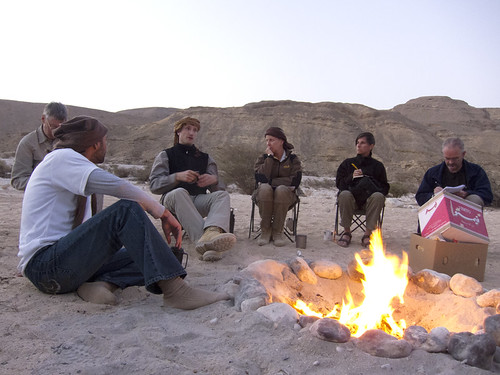
Briefing by the camp fire
A typical day would start with an early briefing at breakfast listing the tasks for the day. The group then would split into small teams taking up specific tasks which could range from trekking an area looking for tracks to retrieving one or more of the cameras set up the previous week or interviewing the locals to document sightings, locate candidate areas for study and raise awareness.

At the end of the day we would gather around the fire before dinner and report on our findings.

Collecting camera traps was my favourite activity: you never knew what you were going to find on the pictures and the remote chance that there could be a Leopard was a very exciting prospective indeed.
Even in this case unfortunately the Leopard kept truthful to its elusive nature however it was rather exciting to see photos of a Caracal, wolf, hyena, genet and other local fauna. Before coming on this expedition I didn’t even know that this variety of animals was present there.

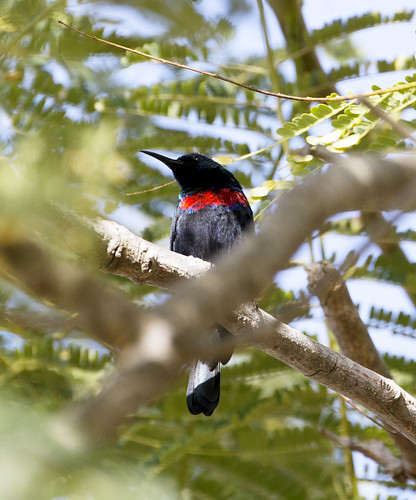
Shining Sunbird
The work is quite physical and requires quite a fair amount of trekking up and down wadis, in hot and dusty conditions; you do need some level of fitness; however it was refreshing to see a mix of ages and backgrounds in the group of volunteers.

At the end of the expedition, the scientist analyses the data collected, ensures that collected specimens go through specialised DNA testing and produces a scientific report for the stakeholders.

For a volunteer coming to an expedition like this there is a lot to learn and experience. On top of the science stuff, recognising tracks and recording data, some people enjoy driving off-road up and down dry river beds for the first time, everybody gets to use GPS and other specialised equipment and in a number of occasions we spotted animals in the wild like Hyrax, Gazelle, Eagles and many other species of birds and critters. 

These kinds of expeditions take enthusiastic volunteers with no scientific background or prior knowledge to experience scientific field research. The funding and time provided by the volunteers contribute directly to a project that otherwise might have not been possible.

This kind of field research can be resource intensive. Finding the money and people is not easy so companies like Biosphere Expeditions bring science and the public together and both groups benefit from such effort while contributing to an increase in awareness. It is hard to find a volunteer who does not return enthusiastic from this kind of experience. Individuals feel truly engaged and compelled to talk about it.

In the past taking part in these experiences required a lot of time, a lot of funding and a bit of an Indiana-Jones’ personality but nowadays there are options for everybody.

While as a personal preference for this kind of experience I tend to lean towards somewhere off the beaten track and prefer something a little bit more adventurous than my standard holiday, you don’t necessarily have to rough it. Expeditions like Biosphere’s Western Australia Flatback turtle research project for example promises a very comfortable and idyllic expedition base. 

So next time you are looking for an idea for a holiday, think about using a week or two to volunteer on a worthwhile project. I can assure you that what you will come back with will be much more than some pretty postcard photos and a healthy glow.

And now if you haven’t had enough of reading, you may also have a look at the article and watch the video published by a Gulf News reporter who came to spend a few days at base camp while I was there: 


Or if you are bored of reading you can always switch to my photo reportage


Enjoy!


Tuesday, 8 March 2011

Back from Salalah

Things have been happening while I was away so my adventures down in the deep (beautiful) south tucked away in a Wadi looking for traces of the elusive Leopard, removed from phone reception and sheltered from the news of ongoing unrest may not be at the top of your priorities. I am sure that most of you will want to know what is going on over here and what the situation is. To be honest I am catching up and I probably know just about as much as you out there or maybe even less.

I left the expedition camp on 4th March and Salalah on 5th March on an epic journey that saw us driving from about 8:30 am to 1:30 am when we reached the Dubai Desert Conservation Reserve! What a killer! We started in a convoy of 4 cars, one of which left us to proceed directly to Muscat while the rest of us headed to the UAE (to drop all the expedition equipment before making our way back to Muscat on a separate schedule). 

We were supposed to do the drive over 2 days with an intermediate stop but for some reason one of the people tasked with the drive managed to complicate things with an optimist flight booking from Muscat pushing us to do it all in one day (even though he eventually changed his flight – long story and very boring too). I felt a bit homicidal at times but in general I actually enjoyed the drive. It may be because I was driving a very comfy car (a super techy  brand new Land Rover LR4 V8) or maybe because I do actually like driving, especially if there is nobody else in the vehicle forcing me into some  mindless polite conversation. Just me, the desolate landscape, the sandstorms, the straight roads and the music. Brill!

I spent one night in the Dubai Desert Conservation Reserve (and saw the beautiful Arabian Oryx too) and then set off again to Muscat on 6th March. The four hours drive required to do this last stretch at seemed so  fast after the drive from Salalah to Dubai ,although I was really tired and had to stop on the roadside for a nap half way through. 

The route from Dubai to Muscat takes you past the now probably famous Sohar Globe Roundabout which you may have seen pictured on the papers over the last week or so.

The roundabout itself was closed and there were people sitting or wandering about in the middle of it and on the roads around it, with banners, big picture of the Sultan etc. but everything looked under control.

There was heavy military presence along the roads there: armored vehicles, huge machine guns in display, helicopter flying low over the area (I could actually see the people inside it from the open side door); but once again it all felt calm and under control. I actually felt tempted to stop and take pictures/video but I thought better of it and drove on.

I am now in Muscat and from a daily life perspective I cannot say that anything has changed. We still go about our usual business and we are not particularly concerned about the situation. 

There are plenty of blogs talking about what is happening so I am not going to add to that. If you are interested in reading some first hand real stories from some local bloggers (as opposed to – impersonal - international news) you may visit the following links:


From two teachers who work in Sohar: http://danandjillian3.blogspot.com/

Next I’ll tell you about the expedition I have just come back from, which was all very interesting.